When Supersonic Studios first soft-launched Going Balls back in early 2021, few mobile industry analysts expected a simple rolling sphere mechanic to command the top charts for over five consecutive years. Yet, looking back at the earliest release archives compared to the polished 2026 builds, the evolution of the game’s APK packages reveals a fascinating trajectory of performance engineering, tactile tuning, and hyper-casual game design.
Understanding how the APK architecture evolved is not just nostalgia—it directly answers why certain legacy physics glitches disappeared, why modern installation files are structured differently, and how device compatibility expanded across budget and flagship hardware alike.
The 2021 Genesis: Minimalist Physics and the Raw Roll (v1.0.0 – v1.12.0)
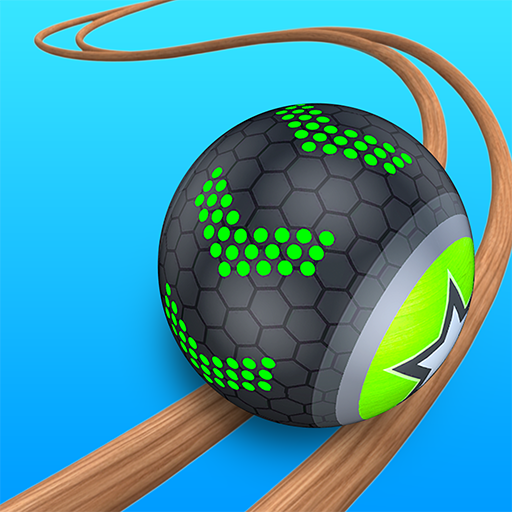
The initial releases of the Going Balls APK were lightweight packages hovering under 45 megabytes. Developed on early Unity LTS branches, the core loop was unapologetically raw:
- Single-Track Geometry: Early tracks used basic wooden textures with straight guardrails and untextured bottomless chasms.
- Linear Physics Engine: Ball acceleration was strictly tied to vertical swipe velocity without angular momentum compensation. If you flicked forward vigorously, the sphere gained instantaneous speed without simulating true centrifugal inertia.
- Barebones UI: There was no customizable skin locker, no key vault chests, and zero bonus multiplier minigames. You rolled, reached the banner, collected a flat coin reward, and proceeded immediately to the next stage.
Despite its minimal footprint, these early APKs suffered from micro-stutter on mid-tier MediaTek chipsets because asset garbage collection occurred dynamically during active run loops instead of at checkpoint transitions.
The 2022 Milestone: Visual Polish, Skins, and Obstacle Complexity (v1.13.0 – v1.28.0)
By mid-2022, player retention data led Supersonic Studios to deploy what many consider the game’s turning point update. The APK size expanded to approximately 75MB to accommodate high-definition texture atlases and modular level assets.
Key additions introduced in this cycle included:
- The Kinetic Obstacle Suite: Pendulum hammers, rotating crosses, pneumatic pistons, and collapsing road tiles were introduced. Prior to this update, failure resulted almost exclusively from mistimed turns or under-jumping gaps.
- Ball Cosmetic Architecture: Developers implemented an extensible skin shader system, separating the mesh collision geometry from the visual rendering sphere. This allowed soccer balls, basketballs, glowing geometric orbs, and seasonal novelty skins to be swapped without altering hitboxes.
- Checkpoint Systems: The frustration curve of restarting three-minute long courses was mitigated by glowing green magnetic checkpoints, altering the flow from punishing arcade discipline to accessible casual progression.
The 2023–2024 Modernization: Engine Migration & 60/120 FPS Optimization
As high-refresh-rate displays became standard across budget Android devices, older Going Balls APKs faced severe input desynchronization. Because touch sampling was originally tied to render frame rate, running the game on a 90Hz or 120Hz display caused the ball to oversteer erratically.
In the major v1.3x architectural overhaul, the engineering team decoupled physics ticks from render ticks:
- Fixed Timestep Physics: FixedUpdate routines were hardcoded to a 60Hz delta time, guaranteeing that whether a player enjoyed 30 FPS on an entry-level smartphone or 120 FPS on a flagship OLED tablet, the ball’s friction coefficient and roll distance remained identical.
- Dynamic Texture Streaming: By packing environments into Addressable Asset Bundles, APK downloads remained streamlined while high-resolution particle effects (sparks on metal rails, dust trails on wooden tracks) were cached in local application storage.
- Haptic Integration: Android vibration APIs were layered onto collision events, providing distinct tactile pulses when scraping railings versus landing flat off high ramps.
The 2025–2026 Current Generation: Multiplayer, Dynamic Audio, and Security Hardening
Modern Going Balls APKs (v1.4x and beyond) represent a mature, highly optimized hyper-casual product. Key contemporary enhancements include:
- Ghost Multi-Ball Racing: Asynchronous leaderboard data is rendered in real-time as translucent competitor orbs along the track, transforming isolated solo runs into dynamic drag races.
- Adaptive Bitrate Audio: Dynamic soundtrack stems that build in tempo and intensity as the ball approaches peak terminal velocity down steep mega-ramps.
- ARM64-v8a Native Code Compilation: Complete phase-out of legacy 32-bit binaries, resulting in faster launch times, zero thermal throttling on modern processors, and reduced battery drain during extended play sessions.
- Google Play App Integrity & Package Signatures: Security signatures have been strengthened against malicious repacks and Trojanized APKs that proliferated across third-party download mirrors.
Comparing Going Balls APK Evolution (2021 vs 2026)
Here is a quick technical comparison highlighting how the package has matured over five years of active development:
- Average Package Size: ~42 MB in 2021 vs ~98 MB in 2026.
- Target Android API: Android 10 (API 29) in 2021 vs Android 15/16 (API 35+) in 2026.
- Rendering Pipeline: Standard Forward Rendering vs Universal Render Pipeline (URP) with bloom and chromatic aberration.
- Touch Latency: ~68ms average vs <24ms on low-latency touch displays.
Final Thoughts for APK Enthusiasts
Going Balls has grown from an experimental physics minigame into an enduring mobile gaming benchmark. By tracking its APK history, we see how thoughtful performance optimization and responsive touch feedback can transform a simple arcade concept into a title that continues to engage tens of millions of active players daily. Always ensure you are downloading verified, signature-matching packages to experience the smooth, balanced physics the developers spent half a decade perfecting.